Grand River Marsh Wildlife Area: hunting and access
Grand River Marsh Wildlife Area is 7,648 acres of land managed by the Wisconsin DNR in Green Lake and Marquette counties, 2 miles from Marquette. The DNR's page for it names pheasants among the game here. Hunters registered 4,589 deer in Green Lake County in 2025.
Data updated October 2026. Area facts: the DNR's DNR property data, read 2026-10. Harvest: DNR Deer Metrics.
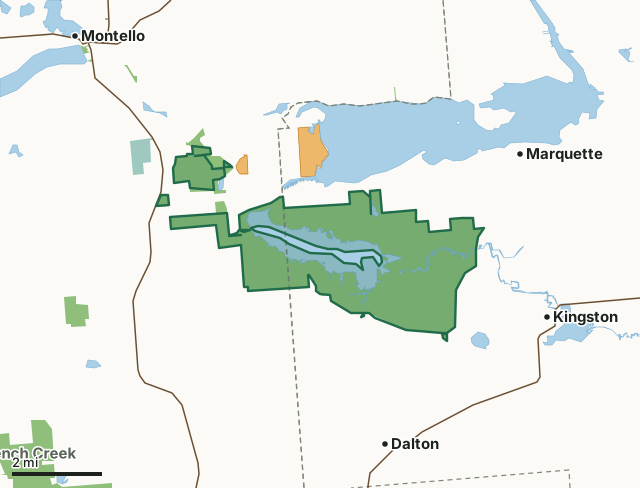
State wildlife areas, forests and other DNR landNational wildlife refuges and waterfowl production areasOther federal landVoluntary Public Access landGrand River Marsh Wildlife AreaCounty lineLakeHighway
| Size | 7,648 acres in 4 pieces |
|---|---|
| Counties | Green Lake County and Marquette County |
| Deer Management Unit | Green Lake County, Marquette County |
| DNR lists for hunting | pheasants |
| Public access (DNR) | Open to Hiking, Fishing, Hunting and Trapping |
| DNR property page | Grand River Marsh Wildlife Area |
| Nearest towns | Marquette (2 mi), Kingston (2 mi) and Dalton (3 mi) |
What is Grand River Marsh Wildlife Area like?
Grand River Marsh Wildlife Area is a 7,000-acre property located in southwest Green Lake County and southeast Marquette County near Lake Puckaway. Find it approximately 5 miles south of Montello, 11 miles north of Pardeeville on County Highway B, or 3 miles west of Kingston on County Highway B. The property consists of an open marsh/emergent cattail wetland, an upland prairie/oak savannah and a shrub carr/wet meadow. This property offers various outdoor recreational opportunities. Small game, waterfowl, deer, and pheasant are among the most popular game that hunters pursue. All these species are abundant throughout the wildlife area. Additional user groups visit the property to hike, gather edible plants, wildlife view and canoe/kayak.
The Grand River Marsh has long provided excellent habitat for a variety of wildlife and migratory waterfowl. Area sportsman's clubs in the 1930s and 1940s conceived the idea of converting it into a wildlife refuge. The proposal received continued support locally as clubs sponsored fundraising projects and contributed money toward acquisition and development. Their verbal and moral support was considered much more valuable than their monetary contributions. Public support for this wildlife area is considered to be among the strongest received in recent history. The preliminary project statement was submitted on Jan. 16, 1958, and the Wisconsin Conservation Commission approved the acquisition of the land on Feb. 21, 1958. Land acquisition began that same year. Much of the uplands and marsh were farmed and grazed.
In the DNR's words, from its page for the property.
What can you hunt on Grand River Marsh Wildlife Area?
The DNR's page for Grand River Marsh Wildlife Area names pheasants. Each follows Wisconsin's statewide season and, for deer, the tags and rules of the deer management unit.
What are the rules on Grand River Marsh Wildlife Area?
The DNR's property map lists Grand River Marsh Wildlife Area as "Open to Hiking, Fishing, Hunting and Trapping". Hunting follows Wisconsin's statewide seasons and the rules posted on the property.
Activities the DNR lists for Grand River Marsh Wildlife Area: Auto travel, Biking (town road only), Birding, Canoeing (no motor boats or electric motors allowed), Camping at a nearby private facility, Cross-country skiing (no designated trail), Fishing, Hiking (no designated trail), Hunting (especially noted for pheasant with noon closure rules applying), Trapping, Wild edibles/gathering and Wildlife viewing.
How many deer are taken around Grand River Marsh Wildlife Area?
Grand River Marsh Wildlife Area lies in 2 deer management units. The DNR registered 4,589 deer in Green Lake County in 2025, against 4,428 in 2024.
| DMU | Grand River Marsh Wildlife Area acres in it | Deer, 2025 | Deer, 2024 | Deer, 2023 |
|---|---|---|---|---|
| Green Lake County | 5,698 | 4,589 | 4,428 | 4,081 |
| Marquette County | 1,950 | 7,790 | 7,744 | 6,550 |
Harvest for the whole deer management unit, not the property alone: Wisconsin DNR Deer Metrics (registered harvest by deer management unit).
How do you get to Grand River Marsh Wildlife Area?
Nearest towns: Marquette (2 miles), Kingston (2 miles), Dalton (3 miles) and Montello (4 miles). Highways within 5 miles: WI 22, WI 44 and WI 23. 2 VPA properties within 3 miles.
What other public land is near Grand River Marsh Wildlife Area?
DNR properties within 10 miles:
- Upper Fox River Public Access: 401 acres, next to it
- Observatory Hill State Natural Area: 178 acres, 2.5 miles away
- Andrew Krakow Public Access And Fishery Area: 23 acres, 2.8 miles away
- Heart Lake Rearing Station: 74 acres, 3.5 miles away
Public land within 3 miles of Grand River Marsh Wildlife Area
Counting Grand River Marsh Wildlife Area itself, 8,260 of the 64,741 acres within 3 miles of its boundary are public land open to the public (12.8%), by USGS PAD-US 4.1 (fee land open to the public).
| Manager | Acres within 3 miles |
|---|---|
| State wildlife areas, forests and other DNR land | 8,071 |
| National wildlife refuges and waterfowl production areas | 183 |
| Other federal land | 5 |
| Other county, city and regional land | 1 |
Questions hunters ask
Where is Grand River Marsh Wildlife Area?
In Green Lake and Marquette counties, 2 miles from Marquette. The DNR's property page has its maps and parking.
Is Grand River Marsh Wildlife Area open to hunting?
Yes. The DNR's property map lists it as "Open to Hiking, Fishing, Hunting and Trapping". Posted refuges or closed areas, where there are any, are marked on site.
Which deer management unit is Grand River Marsh Wildlife Area in?
Green Lake County (5,698 acres) and Marquette County (1,950 acres).
How much public land is around Grand River Marsh Wildlife Area?
8,260 acres within 3 miles of its boundary, Grand River Marsh Wildlife Area included, by PAD-US 4.1. The closest other DNR property is Upper Fox River Public Access (next to it).
Get a Wisconsin hunt plan when they open
Hunt plans for Wisconsin are coming. Join the list and you'll hear first. The first 50 hunters in each new state get their plan free.
Until then, the free FilledTag app for iPhone has a map that works in every state, Wisconsin included.
Where these facts come from
- Area description, species, rules and directions: DNR, Grand River Marsh Wildlife Area; Wisconsin DNR managed lands open to hunting.
- Boundary and acres: the DNR's map layer above. Surrounding public land: USGS PAD-US 4.1 (fee land open to the public).
- Deer harvest: Wisconsin DNR Deer Metrics (registered harvest by deer management unit).
FilledTag is not part of the Wisconsin Department of Natural Resources. Check the DNR's rules and posted signs before you go.
Wisconsin hunting Green Lake County Marquette County Green Lake County Marquette County