Kiel Marsh Wildlife Area: hunting and access
Kiel Marsh Wildlife Area is 851 acres of land managed by the Wisconsin DNR in Calumet, Sheboygan and Manitowoc counties, next to Kiel. The DNR's page for it names deer, wild turkey, ducks and geese, woodcock and rabbits and squirrels among the game here. Hunters registered 1,481 deer in Calumet County in 2025.
Data updated October 2026. Area facts: the DNR's DNR property data, read 2026-10. Harvest: DNR Deer Metrics.
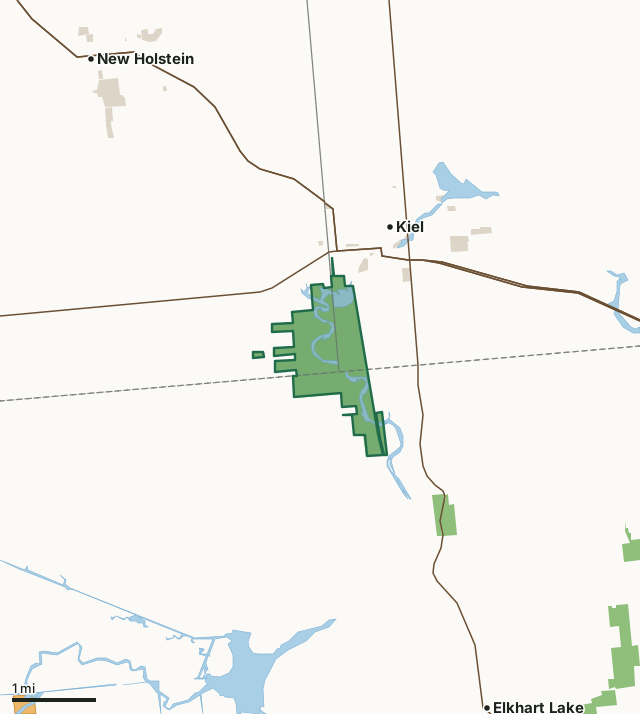
State wildlife areas, forests and other DNR landOther county, city and regional landVoluntary Public Access landKiel Marsh Wildlife AreaCounty lineLakeHighway
| Size | 851 acres in 4 pieces |
|---|---|
| Counties | Calumet County, Sheboygan County and Manitowoc County |
| Deer Management Unit | Calumet County, Sheboygan County, Manitowoc County |
| DNR lists for hunting | deer, wild turkey, ducks and geese, woodcock and rabbits and squirrels |
| Public access (DNR) | Open to Hiking, Fishing, Hunting and Trapping |
| DNR property page | Kiel Marsh Wildlife Area |
| Nearest towns | Kiel (next to it), Elkhart Lake (3 mi) and New Holstein (4 mi) |
What is Kiel Marsh Wildlife Area like?
Kiel Marsh Wildlife Area is an 843-acre property located just south of the city of Kiel in east-central Wisconsin. The property lies at the junction of Sheboygan, Calumet, and Manitowoc counties. Since there are no roads bordering it, the main public access to the marsh is on the north end of the property using the boat access and parking area located at the south end of 8th Street in the city of Kiel. A smaller and less developed boat access and parking area are on the southwest side of the property at the north end of Highview Road (about 3 miles north of Elkhart Lake). These boat accesses provide users the means to get onto the Sheboygan River by boat, canoe, skiff, or kayak. The Sheboygan River meanders lazily for 3 miles through the entire length of the property.
The marsh was formed during the Pleistocene period of the Great Ice Age and is located between the Green Bay and Lake Michigan lobes of the Wisconsin ice sheet. That glacier receded about 11,000 years ago and left behind the interesting topography of moraines in the Kiel Marsh vicinity. These moraines are unique because they were formed by the accumulation of glacial till that occurred between the two ice lobes. Along State Highway 67 on the east side of the marsh are gravelly, steep-sided depressions known as kettles. These kettles formed when buried ice blocks melted and left depressions in the glacial debris. To the north are low, elongated, half-egg-shaped hills known as drumlins. Drumlins contain glacial till that formed in hills parallel to the direction in which the glaciers retreated.
In the DNR's words, from its page for the property.
What can you hunt on Kiel Marsh Wildlife Area?
The DNR's page for Kiel Marsh Wildlife Area names deer, wild turkey, ducks and geese, woodcock and rabbits and squirrels. Each follows Wisconsin's statewide season and, for deer, the tags and rules of the deer management unit.
What are the rules on Kiel Marsh Wildlife Area?
The DNR's property map lists Kiel Marsh Wildlife Area as "Open to Hiking, Fishing, Hunting and Trapping". Hunting follows Wisconsin's statewide seasons and the rules posted on the property.
Activities the DNR lists for Kiel Marsh Wildlife Area: Canoeing (on the Sheboygan River, which flows the length of the property and on the remnant level ditches in the marsh), Cross-country skiing (no designated trail), Fishing, Hiking (no designated trail), Hunting (especially noted for deer, turkey, waterfowl, rabbit, squirrel, woodcock, fox, coyote and raccoon), Snowmobiling (no designated trail), Trapping, Wild edibles/gathering and Wildlife viewing.
How many deer are taken around Kiel Marsh Wildlife Area?
Kiel Marsh Wildlife Area lies in 3 deer management units. The DNR registered 1,481 deer in Calumet County in 2025, against 1,371 in 2024.
| DMU | Kiel Marsh Wildlife Area acres in it | Deer, 2025 | Deer, 2024 | Deer, 2023 |
|---|---|---|---|---|
| Calumet County | 349 | 1,481 | 1,371 | 1,318 |
| Sheboygan County | 296 | 3,562 | 3,536 | 3,251 |
| Manitowoc County | 209 | 4,513 | 4,262 | 4,130 |
Harvest for the whole deer management unit, not the property alone: Wisconsin DNR Deer Metrics (registered harvest by deer management unit).
How do you get to Kiel Marsh Wildlife Area?
Nearest towns: Kiel (next to it), Elkhart Lake (3 miles), New Holstein (4 miles) and Glenbeulah (5 miles). Highways within 5 miles: WI 57, WI 32, WI 67 and WI 149.
What other public land is near Kiel Marsh Wildlife Area?
DNR properties within 10 miles:
- Muehl Springs State Natural Area: 72 acres, 0.7 miles away
- State Ice Age Trail Area (SIATA): 4,676 acres, 2.9 miles away
- La Budde Creek Fishery Area: 392 acres, 3.2 miles away
- Rhine Center Bog State Natural Area: 53 acres, 4.2 miles away
- Sheboygan Marsh Wildlife Area: 864 acres, 4.5 miles away
- Schuet Creek Fishery Area: 45 acres, 5.1 miles away
Public land within 3 miles of Kiel Marsh Wildlife Area
Counting Kiel Marsh Wildlife Area itself, 1,014 of the 30,991 acres within 3 miles of its boundary are public land open to the public (3.3%), by USGS PAD-US 4.1 (fee land open to the public).
| Manager | Acres within 3 miles |
|---|---|
| State wildlife areas, forests and other DNR land | 932 |
| Other county, city and regional land | 82 |
Questions hunters ask
Where is Kiel Marsh Wildlife Area?
In Calumet, Sheboygan and Manitowoc counties, next to Kiel. The DNR's property page has its maps and parking.
Is Kiel Marsh Wildlife Area open to hunting?
Yes. The DNR's property map lists it as "Open to Hiking, Fishing, Hunting and Trapping". Posted refuges or closed areas, where there are any, are marked on site.
Which deer management unit is Kiel Marsh Wildlife Area in?
Calumet County (349 acres), Sheboygan County (296 acres) and Manitowoc County (209 acres).
How much public land is around Kiel Marsh Wildlife Area?
1,014 acres within 3 miles of its boundary, Kiel Marsh Wildlife Area included, by PAD-US 4.1. The closest other DNR property is Muehl Springs State Natural Area (0.7 miles).
Get a Wisconsin hunt plan when they open
Hunt plans for Wisconsin are coming. Join the list and you'll hear first. The first 50 hunters in each new state get their plan free.
Until then, the free FilledTag app for iPhone has a map that works in every state, Wisconsin included.
Where these facts come from
- Area description, species, rules and directions: DNR, Kiel Marsh Wildlife Area; Wisconsin DNR managed lands open to hunting.
- Boundary and acres: the DNR's map layer above. Surrounding public land: USGS PAD-US 4.1 (fee land open to the public).
- Deer harvest: Wisconsin DNR Deer Metrics (registered harvest by deer management unit).
FilledTag is not part of the Wisconsin Department of Natural Resources. Check the DNR's rules and posted signs before you go.
Wisconsin hunting Calumet County Sheboygan County Manitowoc County Calumet County Sheboygan County Manitowoc County