McCann Creek Fishery Area: hunting and access
McCann Creek Fishery Area is 433 acres of land managed by the Wisconsin DNR in Chippewa County, 3 miles from Bloomer. The DNR's page for it names deer, wild turkey, ruffed grouse, woodcock and small game among the game here. Hunters registered 3,544 deer in DMU 110 in 2025.
Data updated October 2026. Area facts: the DNR's DNR property data, read 2026-10. Harvest: DNR Deer Metrics.
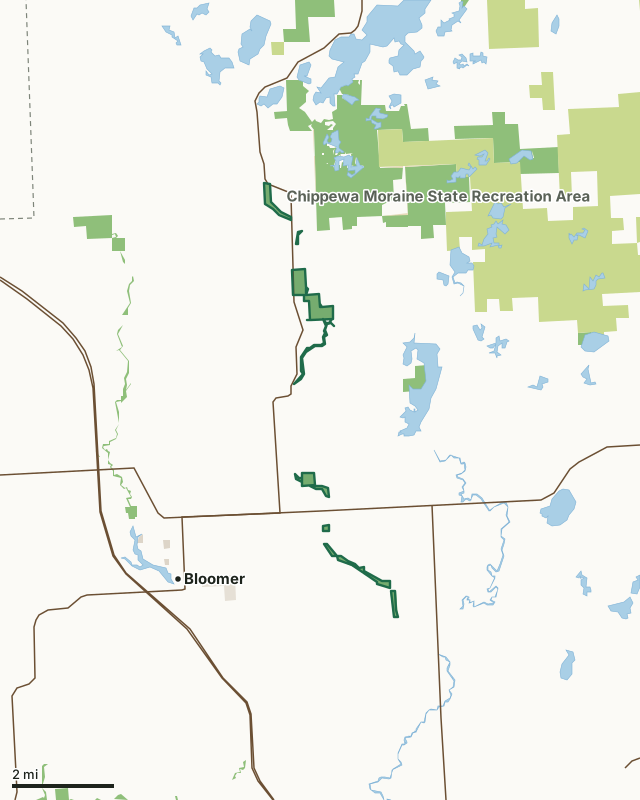
State wildlife areas, forests and other DNR landCounty forestState parksOther county, city and regional landLand trusts and other open landMcCann Creek Fishery AreaCounty lineLakeHighway
| Size | 433 acres in 10 pieces |
|---|---|
| County | Chippewa County |
| Deer Management Unit | DMU 110, DMU Chippewa |
| DNR lists for hunting | deer, wild turkey, ruffed grouse, woodcock and small game |
| Public access (DNR) | Open to Hiking, Fishing, Hunting and Trapping |
| DNR property page | McCann Creek Fishery Area |
| Nearest towns | Bloomer (3 mi), New Auburn (6 mi) and Jim Falls (7 mi) |
What is McCann Creek Fishery Area like?
The McCann Creek Fishery area includes 320 acres of land in fee title, which covers approximately 3.6 miles of stream. Fisheries easements provide public access along an additional 3.4 miles of stream. McCann Creek originates in a large wetland complex and flows through agricultural lands. The water quality of the stream is considered good, but agricultural activities do contribute a moderate level of nutrients. The stream is a low-gradient stream bordered by a narrow wetland strip comprised primarily of tag alder and reed canary grass.
McCann Creek Fishery Area is located in northwest Chippewa County, 3 miles east of Bloomer. McCann Creek is a class 1 brook trout stream and one of the better brook trout streams in Chippewa County. Fishing is limited to bridge crossings, shoreline angling, or wading. Fly fishing is difficult during summer months because of the thick reed canary grass growth that develops along stream banks. McCann Creek is managed for a naturally reproducing brook trout population. Instream habitat work is conducted to improve habitat conditions for all life stages of trout. Land is acquired from willing sellers to protect and improve trout habitat as well as to provide access for anglers. Wisconsin Clear Waters Chapter of Trout Unlimited.
In the DNR's words, from its page for the property.
What can you hunt on McCann Creek Fishery Area?
The DNR's page for McCann Creek Fishery Area names deer, wild turkey, ruffed grouse, woodcock and small game. Each follows Wisconsin's statewide season and, for deer, the tags and rules of the deer management unit.
What are the rules on McCann Creek Fishery Area?
The DNR's property map lists McCann Creek Fishery Area as "Open to Hiking, Fishing, Hunting and Trapping". Hunting follows Wisconsin's statewide seasons and the rules posted on the property.
Activities the DNR lists for McCann Creek Fishery Area: Hunting - deer, grouse, woodcock, turkey, and small game, Trapping, Hiking, Wildlife viewing, Fishing - brook trout, Bird watching and Berry picking.
How many deer are taken around McCann Creek Fishery Area?
McCann Creek Fishery Area lies in 2 deer management units. The DNR registered 3,544 deer in DMU 110 in 2025.
| DMU | McCann Creek Fishery Area acres in it | Deer, 2025 |
|---|---|---|
| DMU 110 | 345 | 3,544 |
| DMU Chippewa | 88 | 6,315 |
Harvest for the whole deer management unit, not the property alone: Wisconsin DNR Deer Metrics (registered harvest by deer management unit).
How do you get to McCann Creek Fishery Area?
Nearest towns: Bloomer (3 miles), New Auburn (6 miles), Jim Falls (7 miles) and Chippewa Falls (11 miles). Highways within 5 miles: US 53, WI 40, WI 64 and WI 124.
What other public land is near McCann Creek Fishery Area?
DNR properties within 10 miles:
- Chippewa Moraine State Recreation Area: 3,555 acres, next to it
- Chippewa Moraine State Ice Age Trail Area: 351 acres, 1.1 miles away
- Marsh Miller Cedars State Natural Area: 116 acres, 1.7 miles away
- Ohmart Wetlands State Natural Area: 718 acres, 2.8 miles away
- Duncan Creek Fishery Area: 360 acres, 2.8 miles away
- Bob Lake State Habitat Area: 40 acres, 4.8 miles away
Public land within 3 miles of McCann Creek Fishery Area
Counting McCann Creek Fishery Area itself, 4,640 of the 56,417 acres within 3 miles of its boundary are public land open to the public (8.2%), by USGS PAD-US 4.1 (fee land open to the public).
| Manager | Acres within 3 miles |
|---|---|
| State wildlife areas, forests and other DNR land | 3,740 |
| County forest | 718 |
| Land trusts and other open land | 127 |
| State parks | 33 |
| Other county, city and regional land | 21 |
| Other federal land | 1 |
Questions hunters ask
Where is McCann Creek Fishery Area?
In Chippewa County, 3 miles from Bloomer. The DNR's property page has its maps and parking.
Is McCann Creek Fishery Area open to hunting?
Yes. The DNR's property map lists it as "Open to Hiking, Fishing, Hunting and Trapping". Posted refuges or closed areas, where there are any, are marked on site.
Which deer management unit is McCann Creek Fishery Area in?
DMU 110 (345 acres) and DMU Chippewa (88 acres).
How much public land is around McCann Creek Fishery Area?
4,640 acres within 3 miles of its boundary, McCann Creek Fishery Area included, by PAD-US 4.1. The closest other DNR property is Chippewa Moraine State Recreation Area (next to it).
Get a Wisconsin hunt plan when they open
Hunt plans for Wisconsin are coming. Join the list and you'll hear first. The first 50 hunters in each new state get their plan free.
Until then, the free FilledTag app for iPhone has a map that works in every state, Wisconsin included.
Where these facts come from
- Area description, species, rules and directions: DNR, McCann Creek Fishery Area; Wisconsin DNR managed lands open to hunting.
- Boundary and acres: the DNR's map layer above. Surrounding public land: USGS PAD-US 4.1 (fee land open to the public).
- Deer harvest: Wisconsin DNR Deer Metrics (registered harvest by deer management unit).
FilledTag is not part of the Wisconsin Department of Natural Resources. Check the DNR's rules and posted signs before you go.