Mud Lake Wildlife Area-Columbia: hunting and access
Mud Lake Wildlife Area-Columbia is 2,281 acres of land managed by the Wisconsin DNR in Columbia County, 2 miles from Rio. Hunters registered 7,189 deer in Columbia County in 2025.
Data updated October 2026. Area facts: the DNR's DNR property data, read 2026-10. Harvest: DNR Deer Metrics.
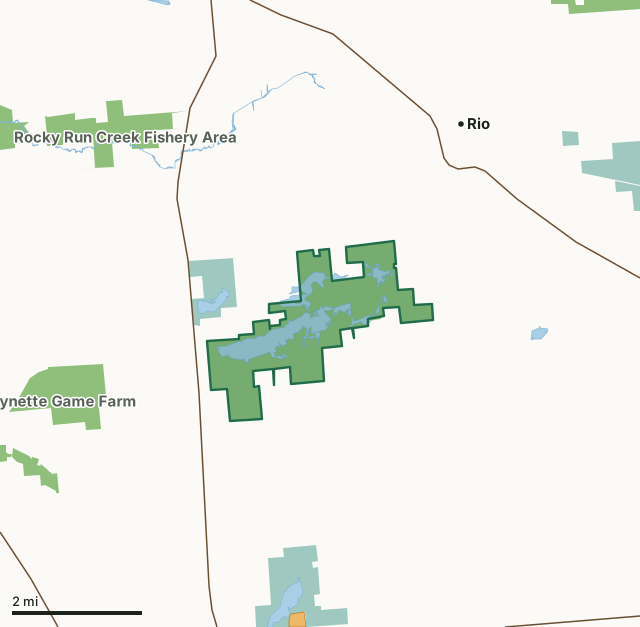
State wildlife areas, forests and other DNR landNational wildlife refuges and waterfowl production areasVoluntary Public Access landMud Lake Wildlife Area-ColumbiaCounty lineLakeHighway
| Size | 2,281 acres in 2 pieces |
|---|---|
| County | Columbia County |
| Deer Management Unit | Columbia County |
| Public access (DNR) | Open to Hiking, Fishing, Hunting and Trapping |
| DNR property page | Mud Lake Wildlife Area |
| Nearest towns | Rio (2 mi), Poynette (4 mi) and Wyocena (5 mi) |
What is Mud Lake Wildlife Area-Columbia like?
Mud Lake Wildlife Area is a 2,283-acre property located in Columbia County. Find it south of Rio, 1 mile on Highway C, then west on Drake Road 1 mile. The property consists of approximately 1,080 acres of wetland, 590 acres of upland and 613 acres of forested habitat. The Mud Lake area has long provided excellent habitat for a variety of wildlife and migratory birds. Action to acquire lands in and around the Mud Lake marsh commenced in 1948. In 1940, a ditch to drain the marsh was constructed by private landowners. The Wisconsin Public Service Commission responded to complaints of the marsh drainage and ordered that normal water levels of Mud Lake be reestablished. The Wisconsin Conservation Department (now the Wisconsin DNR) constructed dikes and installed water control structures to manipulate water levels in the Mud Lake basin.
In 1958, through the cooperation of the Rio Conservation Club, an artesian well was reopened on the south side of Mud Lake to allow continuous water flow into the marsh. The amount of flow appears to be dependent on groundwater recharge. Three flowages (about 50, 110, and 800 acres) have been developed and maintained for waterfowl and furbearer use, as well as to provide hunting, trapping and non-consumptive recreation opportunities. The wildlife area includes a 160-acre refuge that is closed to all entry from Sept. 1- Nov. 30 except for deer hunting during the gun and muzzleloader seasons. Mud Lake Wildlife Area includes two areas designated as State Natural Areas: Mud Lake Forest and Ponds SNA and Empire Prairies SNA. The Wildlife Area is also part of Wisconsin Important Bird Areas- Northern Empire Prairie Wetlands.
In the DNR's words, from its page for the property.
What are the rules on Mud Lake Wildlife Area-Columbia?
The DNR's property map lists Mud Lake Wildlife Area-Columbia as "Open to Hiking, Fishing, Hunting and Trapping". Hunting follows Wisconsin's statewide seasons and the rules posted on the property.
Activities the DNR lists for Mud Lake Wildlife Area-Columbia: Birding, Boating (motorized and non-motorized), Canoeing, Cross-country skiing (no designated trail), Fishing, Hiking (no designated trail), Kayaking, Columbia County shooting range, Snowmobiling trail, Snowshoeing (no designated trail), Trapping, Wild edibles/gathering and Wildlife viewing.
How many deer are taken around Mud Lake Wildlife Area-Columbia?
Mud Lake Wildlife Area-Columbia lies in Columbia County. The DNR registered 7,189 deer in Columbia County in 2025, against 7,176 in 2024.
| DMU | Mud Lake Wildlife Area-Columbia acres in it | Deer, 2025 | Deer, 2024 | Deer, 2023 |
|---|---|---|---|---|
| Columbia County | 2,281 | 7,189 | 7,176 | 6,629 |
Harvest for the whole deer management unit, not the property alone: Wisconsin DNR Deer Metrics (registered harvest by deer management unit).
How do you get to Mud Lake Wildlife Area-Columbia?
Nearest towns: Rio (2 miles), Poynette (4 miles), Wyocena (5 miles) and Arlington (5 miles). Highways within 5 miles: WI 22, WI 16, US 51 and WI 60.
What other public land is near Mud Lake Wildlife Area-Columbia?
DNR properties within 10 miles:
- Poynette Game Farm: 625 acres, 1.6 miles away
- Rowan Creek Fishery Area: 651 acres, 2.7 miles away
- Rocky Run Creek Fishery Area: 741 acres, 2.7 miles away
- Grassy Lake Wildlife Area: 701 acres, 3.3 miles away
- Rocky Run Oak Savanna State Natural Area: 164 acres, 3.4 miles away
- Jennings Creek Wildlife Area: 532 acres, 4.4 miles away
Public land within 3 miles of Mud Lake Wildlife Area-Columbia
Counting Mud Lake Wildlife Area-Columbia itself, 3,880 of the 40,135 acres within 3 miles of its boundary are public land open to the public (9.7%), by USGS PAD-US 4.1 (fee land open to the public).
| Manager | Acres within 3 miles |
|---|---|
| State wildlife areas, forests and other DNR land | 3,086 |
| National wildlife refuges and waterfowl production areas | 794 |
Questions hunters ask
Where is Mud Lake Wildlife Area-Columbia?
In Columbia County, 2 miles from Rio. The DNR's property page has its maps and parking.
Is Mud Lake Wildlife Area-Columbia open to hunting?
Yes. The DNR's property map lists it as "Open to Hiking, Fishing, Hunting and Trapping". Posted refuges or closed areas, where there are any, are marked on site.
Which deer management unit is Mud Lake Wildlife Area-Columbia in?
Columbia County.
How much public land is around Mud Lake Wildlife Area-Columbia?
3,880 acres within 3 miles of its boundary, Mud Lake Wildlife Area-Columbia included, by PAD-US 4.1. The closest other DNR property is Poynette Game Farm (1.6 miles).
Get a Wisconsin hunt plan when they open
Hunt plans for Wisconsin are coming. Join the list and you'll hear first. The first 50 hunters in each new state get their plan free.
Until then, the free FilledTag app for iPhone has a map that works in every state, Wisconsin included.
Where these facts come from
- Area description, species, rules and directions: DNR, Mud Lake Wildlife Area-Columbia; Wisconsin DNR managed lands open to hunting.
- Boundary and acres: the DNR's map layer above. Surrounding public land: USGS PAD-US 4.1 (fee land open to the public).
- Deer harvest: Wisconsin DNR Deer Metrics (registered harvest by deer management unit).
FilledTag is not part of the Wisconsin Department of Natural Resources. Check the DNR's rules and posted signs before you go.