Mule Deer Migration: What Snow Means for Your Hunt
How snow, forage and buck migration timing affect a mule deer hunt, with research limits and a field checklist for Colorado GMUs 25 and 26.
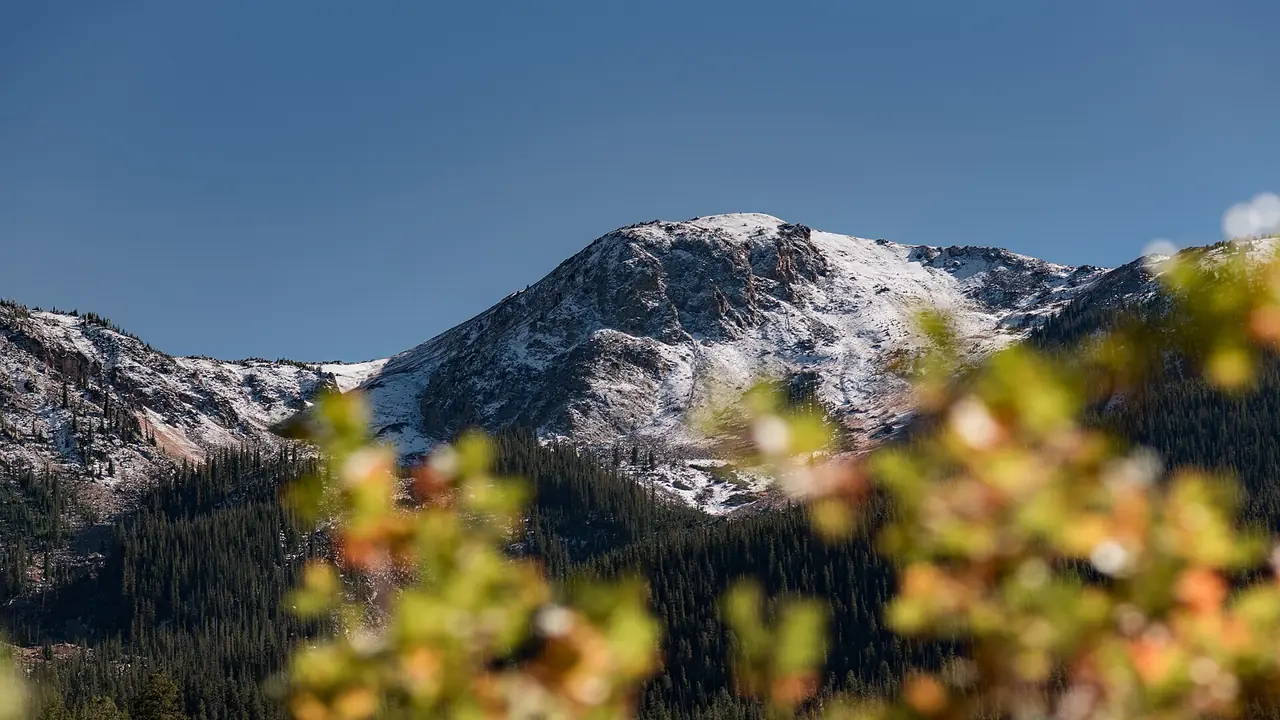
Snow can change where you should look for mule deer, but a snowy forecast does not tell you that every buck has reached winter range. Migration can include feeding stops, and bucks and does do not necessarily finish together. Start with conditions and fresh observations rather than a fixed elevation or calendar date. [1, 2]
Do mule deer move straight downhill after a storm?
A Wyoming study followed 163 mule deer between summer and winter ranges. Deer balanced snow exposure against the forage still available along the way. They avoided snow more strongly near summer range and tolerated more of it as they approached winter range. [1]
That makes transition country worth checking. A deer can pause along its route rather than travel from a high basin to its final winter range in one movement. The study describes a population pattern, not a way to identify an occupied hillside from a forecast. [1]
For scouting, the practical inference is to keep more than a high-country and a low-country option. Include an accessible place between them where you can check for current deer use. Treat that as a place to investigate, not a known migration stopover.
Will the bucks be where you saw the does?
Not necessarily. GPS research in south-central Wyoming and northwest Colorado found that males finished autumn migration later and took 44% longer to complete it than females. Both sexes showed fidelity to their migration routes, though that fidelity was more variable among males. [2]
Seeing does lower down is useful evidence that deer are using that country. It does not establish that all the bucks have arrived, or that a particular buck is still above them. The study's average difference cannot be converted into a certain number of days to wait. [2]
How to adjust a GMU 25 or 26 scouting plan
Our GMU 25 deer page and GMU 26 deer page provide unit reference information. The migration studies here do not establish a migration date, snow trigger or occupied elevation for either unit.
Use this checklist to organize your own observations:
- Before leaving: mark an upper, middle and lower observation option within the area your license allows. Check ownership and access separately for each one.
- At the first stop: record where you actually see deer, whether they are bucks or does, and where snow is covering potential feeding ground. Write down observations separately from guesses.
- After a storm: revisit an observation point before committing a full day to a different elevation. Compare what changed instead of treating snowfall alone as proof of migration.
- If you find only does: keep looking at other legal observation options. Do not turn the population average into a rule that bucks must be a set distance uphill.
- Before moving camp: check the next access route and your exit. A possible improvement in deer activity is not evidence that a road remains passable.
These are suggested field checks derived from the research questions, not tested tactics for these two units. Our public-land guide and motor vehicle use map guide explain the separate access checks.
What if rifle season opens and the bucks disappear?
Check the pressure explanation as well as migration. Research from south-central Wyoming found that bucks selected habitat farther from motorized routes during rifle season, while weather was the principal influence on migration timing. That finding does not give a universal walking distance from a road. [3]
Read Do Mule Deer Bucks Leave When Rifle Season Starts? for the pressure evidence and its limits. A missing roadside sighting can have several explanations; the studies cannot tell you which one applies to a buck you saw last week.
What this research cannot tell you
The sources below are publication abstracts hosted by the U.S. Geological Survey. They support the broad findings described here; we have not reviewed the full papers for this guide. None provides current deer locations or a validated GMU 25 or 26 hunting forecast. Local observations still have to establish whether deer are using the country you can legally hunt.
For help organizing your trip, see FilledTag hunt plans. A plan is a planning aid built from public data, not a current animal sighting.
Sources
- Ortega, A.C. and colleagues (2024). A test of the frost wave hypothesis in a temperate ungulate. Ecology. USGS publication abstract. Wyoming migration study; research-library record S-02-004.
- Rodgers, P.A. and colleagues (2021). Sex-specific migratory behaviors in a temperate ungulate. Ecosphere. USGS publication abstract. Wyoming and northwest Colorado; research-library record S-02-003.
- Rodgers, P.A. and colleagues (2021). Sex-specific behaviors of hunted mule deer during rifle season. Journal of Wildlife Management. USGS publication abstract. South-central Wyoming; research-library record S-02-001.
Have a tag for this fall?
FilledTag builds one exact plan for it: where to park, camp and sit, with every pin checked against public land and road rules. Custom plans start at $39.99.